Rod Menguis Book an assessment

AI and automation for growing businesses

Stop losing customers to missed calls, slow follow-up and manual work.

I build systems that answer your phone when your team cannot, follow up with every lead automatically, and take the repetitive admin off your people so they can do the work that actually needs a human.

Customercalls or enquiresAI receptionistanswers, qualifiesAutomationroutes and follows upCRM recordeverything loggedYour teampicks up readyText follow-upEmail and tasks
12+ years in call centre and customer operations AI phone systems answering real business lines today Based in Manila, working with US and UK businesses

The usual suspects

Where is your business losing time or customers?

Most businesses do not have a marketing problem. They have a response problem. These are the four I see most often.

The phone goes unanswered

Customers call while your team is on a job, with another customer, or off for the night. Most people who reach voicemail simply call the next business on the list.

What fixes itAn AI receptionist that answers every call, day or night.

Follow-up happens too late

An enquiry comes in and nobody gets back to them for hours, or at all. By then they have already spoken to someone else.

What fixes itAutomatic response and follow-up the moment a lead arrives.

Your team does the same work over and over

Copying details between systems, chasing updates, building the same document every week. Hours a day that nobody chose to spend.

What fixes itAutomating the repetitive steps so people handle exceptions.

Nothing talks to anything else

Your bookings are in one place, your customer notes in another, your invoices somewhere else. Nobody can see the whole picture of a customer.

What fixes itConnecting your existing tools so information flows.

How I help

Four kinds of systems, all built around what your business actually does.

I do not sell software licences. I look at how your business runs, find where it leaks, and build the thing that stops the leak.

AI phone answering

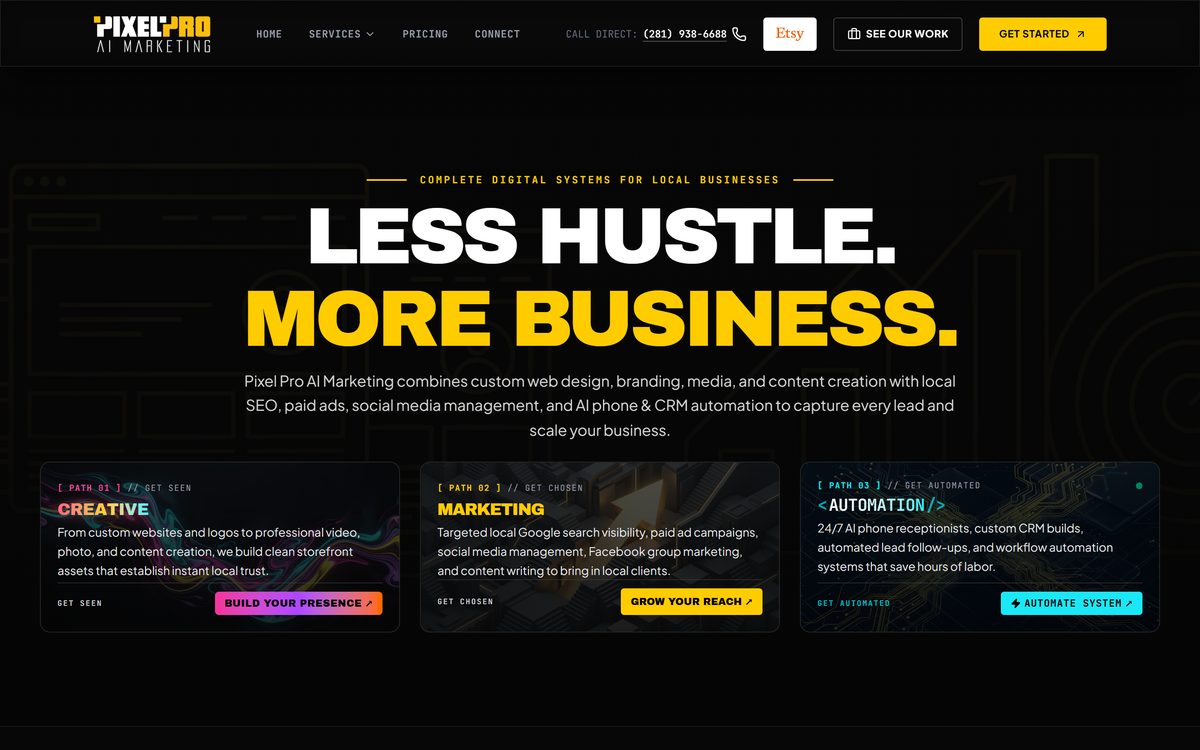
An AI that picks up, has a real conversation with the caller, works out what they need, takes their details, books the appointment, and passes the call to a person when the situation calls for judgement. It works nights and weekends without overtime.

Lead and sales follow-up

Every enquiry gets answered in under a minute, gets asked the right questions, goes to the right person, and keeps getting followed up until someone actually replies. Nothing sits in an inbox going cold.

Customer and CRM systems

One place where every call, message, appointment, note and file about a customer lives together. Any member of your team can open a customer and see the whole story rather than piecing it together.

Custom business automation

Dashboards, client portals, internal tools and behind-the-scenes automations built around how your business actually works, rather than forcing your business to fit someone else's software.

What changes

The same situation, before and after.

This is the clearest way to explain what these systems actually do.

Someone calls while your team is busy

Before
  • Phone rings, nobody free to answer
  • Call goes to voicemail
  • Message picked up hours later, if at all
  • Customer has already booked with someone else

You never find out you lost the job.

After
  • AI answers on the first ring
  • Finds out what the customer needs
  • Takes their name and a number that is confirmed correct
  • Books the appointment, or takes a proper message
  • Your team gets notified with the full context
  • A person takes over whenever it needs one

You wake up to a booked job instead of a missed call.

A new enquiry comes in from your website or ads

Before
  • Lead lands in an inbox
  • Someone notices it eventually
  • First reply goes out hours or days later
  • One follow-up, then it is forgotten

You paid for the lead either way.

After
  • Lead gets a reply within a minute
  • Gets asked the questions that qualify them
  • Goes to the right person on your team automatically
  • Keeps being followed up on a schedule until they reply
  • Stops the moment they book or reply, so nobody gets pestered

Every lead gets the same fast, consistent treatment.

The same admin job, every single week

Before
  • Someone exports a file
  • Retypes it into another system
  • Builds the same report by hand
  • Chases three people for the missing parts

Hours a week, and mistakes when it gets rushed.

After
  • The system collects the information as it happens
  • Moves it where it needs to go on its own
  • Produces the report on schedule
  • Flags only the things that genuinely need a decision

Your team handles exceptions instead of doing data entry.

You do not need to understand the technology.

You just need to know what is slowing your business down. Tell me what happens on a normal day, where things get stuck, and what your team complains about. I will work out where automation or AI genuinely helps, and where it honestly would not be worth it.

If a problem is better solved by changing a process rather than buying technology, I will tell you that too.

Selected work

Systems running in real businesses, not concepts.

Each one started as a specific business problem. Open any of them to see what was happening before, what got built, and what changed.

Why I see the problems

I spent twelve years inside the operations I now automate.

Before I built software, I ran customer operations teams. I have handled the escalations, sat in the quality reviews, built the schedules, and been the person a customer complains to. That is why I tend to find the bottleneck quickly: I have usually worked in one like it.

Most people who build automation have never worked a queue. It shows in what they build.

Bell Canada AT&T Dell Telus

What that background covered

  • Customer service and customer experience
  • Sales and retention
  • Operations management
  • Quality assurance and coaching
  • Escalations and difficult customers
  • Workforce planning and scheduling
  • Process design and documentation

Who this suits

Businesses where a missed call or a slow reply costs real money.

These are the kinds of businesses I work with most. It is not an exclusive list. If your business runs on phone calls, enquiries and follow-up, the same principles apply.

Home services

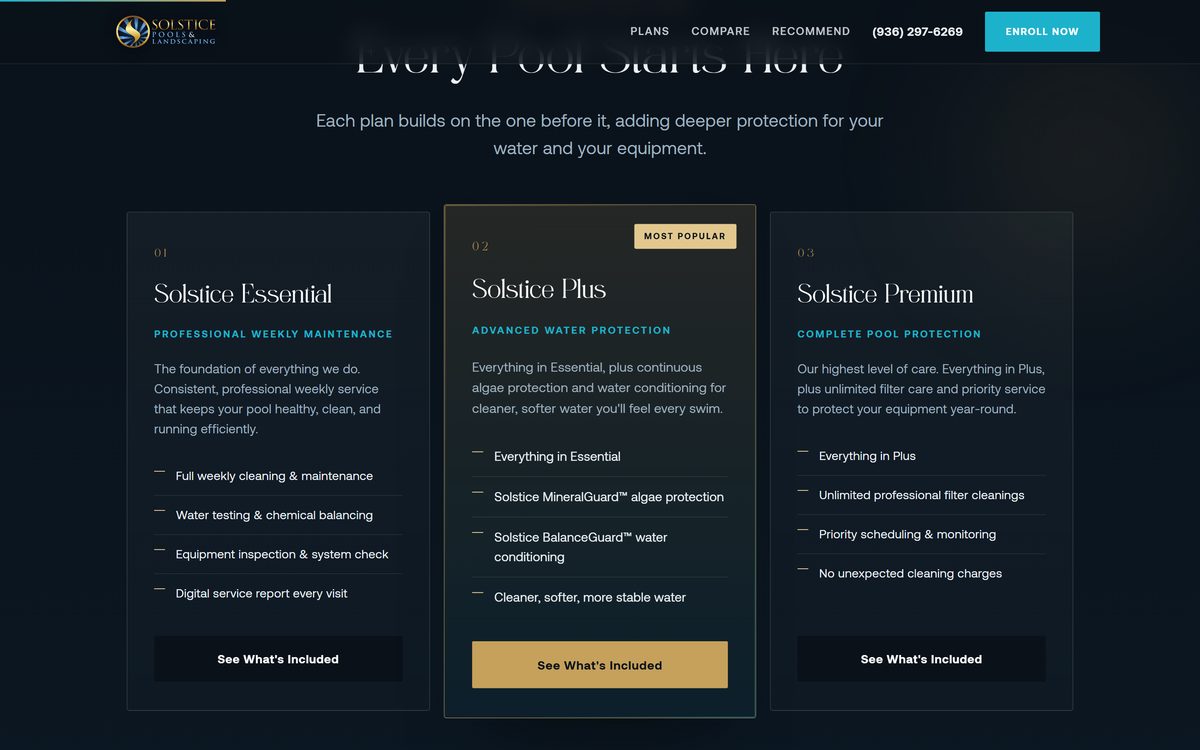
Plumbing, HVAC, roofing, electrical, pool care and landscaping. Crews are on site, the phone rings anyway, and the first business to call back usually wins the job.

Real estate and property

Enquiries arrive at all hours and go cold fast. Qualifying, routing to the right agent, and consistent follow-up make the difference.

Construction and trades

Enquiry intake, customer updates and project paperwork that currently lives in somebody's phone and somebody else's spreadsheet.

Healthcare and med spas

Appointment handling, reminders and enquiry response, with clear rules about what a system may discuss and when a human must take over.

Agencies

Client communication, delivery tracking, onboarding and the internal admin that grows faster than the client list does.

Professional services

Intake, scheduling, follow-up and the recurring administrative work that sits between winning a client and actually serving them.

How it works

Five steps, and you only need to be involved in two of them.

01

Find the bottleneck

We talk through a normal week and find where time, customers or money are leaking.

02

Design the fix

I map what should happen instead, and tell you plainly what is worth automating.

03

Build it

I build the system, connect it to the tools you already use, and document it.

04

Test it properly

We run real situations through it, including the awkward ones, before it goes live.

05

Put it to work

It runs in the background. I stay reachable for when something needs changing.

Questions

The things business owners usually ask first.

What kind of businesses do you work with?

Mostly businesses where the phone and the follow-up matter: home services, trades, property, clinics, agencies and professional services. The common thread is not the industry, it is that enquiries arrive faster than the team can handle them.

Do I have to replace the software I already use?

Usually not. Most of the time the better answer is to connect what you already have so it works together. I would only suggest replacing something if it is actively costing you more than it saves.

Can you connect the tools we already use?

In most cases yes. If a tool offers a way for other software to talk to it, it can usually be connected. If it genuinely cannot, I will tell you early rather than build around a dead end.

Do I need to understand any of the technology?

No. You need to be able to describe what happens in your business on a normal day, and what frustrates you about it. That is the part only you know. The rest is my job.

Will AI replace my staff?

That is not what I build. These systems handle the repetitive and the after-hours work so your people spend their time on the conversations and decisions that actually need a human. The handover to a person is designed in from the start, not bolted on.

What happens when the AI cannot handle something?

It passes the caller to a person. Knowing when to stop and hand over is one of the most important parts of the build, and it gets tested harder than anything else. A system that guesses when it should escalate is worse than no system.

How long does it take to build?

It depends entirely on scope, and I would rather look at your situation than quote a timeline I cannot stand behind. The assessment is where that becomes clear.

Can you build something completely custom?

Yes. A good part of my work is tools that do not exist off the shelf: portals, dashboards, internal systems and automations shaped around one specific way of working.

What does the free assessment actually include?

A conversation about how your business runs day to day, where things get stuck, and an honest view of which parts are worth automating and which are not. You get that view whether or not you decide to work with me.

Tell me what is slowing your business down.

You do not need a specification or a technical brief. Just describe what happens on a normal day and where it goes wrong. I will tell you honestly whether I can help.

rodolfo.menguis@gmail.com
Enlarged screenshot